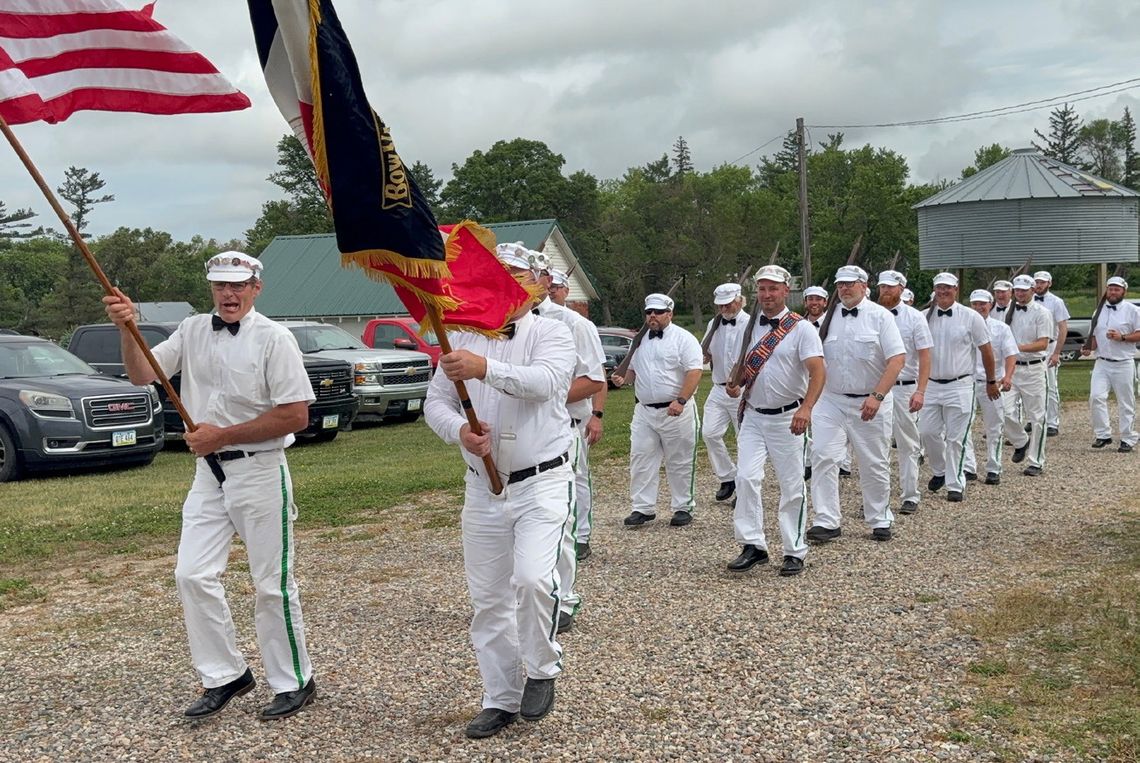
Bow Valley Schuetzenverein makes trip to Hayes Township King Shoot

LAUREL — Members of the Bow Valley Schuetzenverein boarded a bus bound for Westside, Iowa, to take part in the Hayes Township Schuetzenverein’s 2026 King Shoot last month, not just to participate in another German heritage celebration but to support the preservation of tradition.
For roughly two decades, members of the Bow Valley Schuetzenverein and the Hayes Township Schuetzenverein near Westside, Iowa, have traveled across state lines to support one another's German heritage celebrations, forging a relationship that leaders on both sides say has become as important as the traditions themselves.
'Brothers from other mothers' is how Bow Valley Park Association board member Randy Noecker describes the relationship.
The connection began about 20 years ago after members of the two groups met through the Omaha German American Association. Since then, members of both the Bow Valley and Hayes Township Schuetzenvereins have regularly attended each other's events, with Bow Valley members making the trip to Iowa for the King Shoot each year when possible and Hayes Township members returning the favor during Bow Valley's quinquennial Schuetzenfest celebrations.
For Troy Gehlson, treasurer of the Hayes Township Schuetzenverein, the partnership reflects a shared commitment to preserving a tradition that has become increasingly rare.
'There's not a lot of celebrations like that left anymore,' Gehlson said. 'And this is one of the few, so if we can have a chance to celebrate with them, we definitely want to celebrate with them.'
The Hayes Township Schuetzenverein was established in 1883, while the Bow Valley Schuetzenverein was established in 1896. Both organizations trace their roots to German immigrants who settled the Midwest and established shooting societies, or schuetzenvereins, that combined marksmanship, fellowship and cultural traditions. Preserving that heritage is helped by cooperation among the remaining groups.
'It's agreed by all that in order to grow an enduring organization we have to support everyone that's still doing the schuetzenfests,' Noecker said. 'We can't make it to all of them, so we commit to Westside as much as possible.'
The two communities share many of the same customs, from crowning shooting kings to celebrating German culture through food, music and fellowship.
Gehlson said the arrival of the Bow Valley group is always a highlight of the Hayes Township Schuetzenverein's annual King Shoot celebration.
'When those guys show up, the party's on, the party started,' he said. 'They're there to have fun, and we know they're there to have fun, and we all have a great time together.' This year, the Bow Valley Schuetzenverein brought more than two dozen participants to Westside’s event in early June, and the Hayes Township Schuetzenverein plans to return the favor by chartering a bus for a trip to Nebraska for the Bow Valley Schuetzenfest set for Aug. 1-2.
Over the years, the visits have created lasting friendships, even if many members only see one another during the celebrations.
“We look forward to seeing them when we have our King Shoot celebration every year,” Gehlson said. “And I think they look forward to seeing us just because of the relationships we forge with them.”
Those relationships are rooted in a deeper appreciation for the sacrifices made by the German immigrants who settled the region.
“I’m overjoyed knowing that a lot of people are grateful to the people that settled this area,” Noecker said. “Leaving a life in Germany that wasn’t easy but nonetheless they left a life, a family, their friends and everything they’d built there to strike out and start over.”
Gehlson said maintaining that connection to the past is especially important as traditional schuetzenfests become less common across the Midwest.
“These two groups, we’re few and far between,” he said. “We don’t want to see the heritage go. We want to keep the tradition alive. We all want to pass it on to the next generation.”
For those involved, the annual trips are about more than preserving history. They are about ensuring future generations experience the same sense of community, pride and belonging that has connected the two groups for years.