Go to main contentsGo to search barGo to main menu
Leaderboard (below main menu) securechecking
Leaderboard (below main menu) bankofhartington

Environmental Trust funds sought to help solve governor’s budget woes

All things Nebraska

There are ways to change state policies, and there are other ways to change state policies.

Which brings us to the “death by a thousand cuts” of the Nebraska Environmental Trust.

The Trust was created back in 1992, when Nebraska voters decided to join a growing number of states launched state lotteries to generate extra revenue.

(That seems like centuries ago, before casinos were in every big city, and before you could lose a paycheck in an afternoon at a “skill game” in your local tavern. It was also long before we could bet on random stuff like whether President Trump mentions “the Supreme Court” in a speech or if the government will admit that aliens exist.)

Anyway, the goal was to split the Nebraska Lottery proceeds between education and the environment, providing extra funds for projects and programs that state agencies could not normally afford. The Environment Trust handed out funds for environmental and conservation projects, things like dredging out a silted-in lake, reducing nitrates in groundwater, improving wildlife habitat, and helping local recycling projects.

Over the years, the Trust has awarded more than $425 million in grants, grants that have gone to every county in the state via a competitive process.

But things started coming off the rails in 2020, after the Environmental Trust board of directors, in a controversial move, decided to take away grants to some habitat projects, and instead award that money to install ethanol blender pumps and storage tanks at gas stations across the state.

The swap sparked a successful lawsuit, which claimed, among other things, that the ethanol grant violated the Trust’s rules about providing private financial gain.

But the kerfuffle also inspired some big changes at the Trust. For one, the then-governor, Pete Ricketts, who couldn’t directly order which grants should be approved, began appointing new members to the Trust board aligned with his desires.

The Trust’s director, deemed too friendly with wildlife conservation groups, was forced out, and a new director, handpicked by the new board members, led efforts to radically change how grant applications were screened and approved.

In 2022, that resulted in nearly one-third of the grant applications being deemed “ineligible” for funds, including several groups that had regularly been awarded Trust grants. The next year, nearly half were deemed ineligible.

Some state senators and former Trust board members criticized the much higher number of grants being ruled out. One woman cried at a board meeting when describing the financial disaster the decision meant for her city’s recycling program.

A former state senator described the changes this way to the Trust board – “If your intent is to confuse, frustrate and prohibit small grants, … you’re going to have a huge success.”

The mass declarations of ineligibility and a pile of new rules led many groups to quit applying for grants, figuring it was a waste of time and their applications weren’t welcome.

Conveniently, it also resulted in the Trust awarding much less (up to nearly half less) than the $20 million-a-year it gets from the lottery for environmental and conservation grants.

That, again conveniently, led to the amassing of a huge surplus of funds at the Trust, of which Gov. Pillen wants to plunder this year to resolve his budget problems.

Pillen wanted $33 million in Trust funds to build a marina and boat docks, which some state senators rightly saw as probably unconstitutional because Trust funds aren’t intended for recreation. So the Legislature’s budget committee trimmed back that take to about $5 million, which will be spent on improving fish habitat and dredging out the lake things the Trust can finance.

We all want government agencies to function and achieve their goals. For years, the Environmental Trust did that, handing out its yearly allotment of Nebraska Lottery funds for worthy environmental and conservation projects.

Now, the Trust is subject to almost yearly raids of its funds to solve state budget problems.

It has left environmental, wildlife and recycling groups -- who used to apply and get grants regularly -- wondering if there will be any grant money left for them.

Paul Hammel has covered the Nebraska state government and the state for decades. Prior to his retirement, he was senior contributor with the Nebraska Examiner.


Share
Rate

Leaderboard (footer) donmiller
Leaderboard (footer) bankofhartington
Download our app!
App Download Buttons
Google Play StoreApple App Store
Randolph Public Schools - Bus Drivers
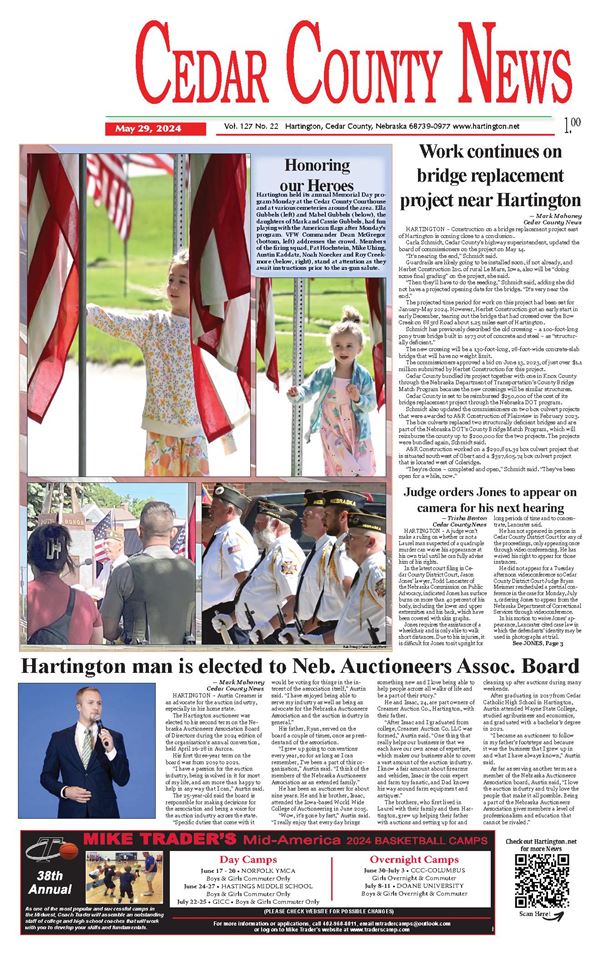
Read Cedar County News e-Edition
Cedar County News
Read Laurel Advocate e-Edition
Laurel Advocate
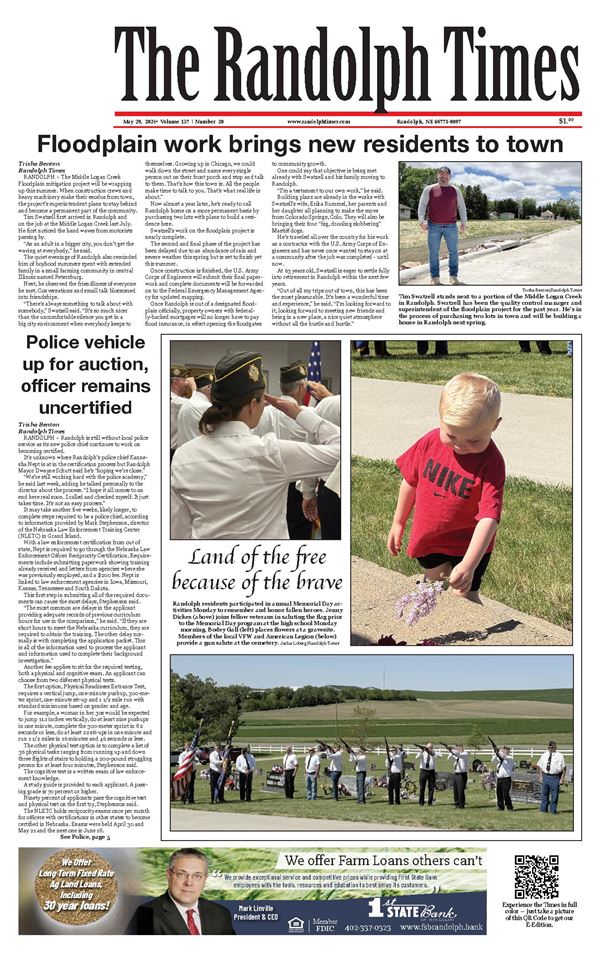
Read The Randolph times e-Edition
The Randolph Times