Go to main contentsGo to search barGo to main menu
Wednesday, December 31, 2025 at 8:18 PM
Leaderboard (below main menu) securechecking
Leaderboard (below main menu) bankofhartington

It was a year of change in Randolph

It was a year of change in Randolph
Tony Backer was hired as Randolph’s new Chief of Police in 2025, ending a tumultuous run for the city. He was the third person to hold the position in one year’s time.

RANDOLPH — January opened with Randolph still reckoning with decisions made the year before, none more significant than the narrow defeat of the school district’s $9.75 million bond proposal. While the measure fell short, district leaders moved quickly to address immediate needs, advancing roof repairs and asbestos removal using the special building fund while beginning work on a revised bond plan. The message was clear early in the year: the conversation was not over.

Public safety and local governance also remained front and center. The city continued stabilizing its police department following months of uncertainty, while newly elected county officials were sworn in and began settling into their roles. Even amid transition, Randolph’s institutions continued operating with a steady eye toward continuity.

The completion of the Middle Logan Creek Floodplain Project — decades in the making — stood as one of the most consequential milestones of the year, dramatically reducing flood risk and reshaping Randolph’s long-term development outlook. Downtown optimism followed soon after, as Rural Roots Boutique opened a brick-and-mortar storefront, reinforcing the role of small businesses in sustaining the town’s economic and social life.

February, 2025

February brought visible change to downtown Randolph as demolition crews began removing three long-standing nuisance properties that had stalled redevelopment efforts for years. Though the process was not without complications, city leaders emphasized that clearing unsafe structures was a necessary step toward long-term revitalization. Beyond downtown, school officials unveiled a scaled-back bond proposal, trimming about $1 million from the earlier plan while preserving its core goals. At the same time, city officials learned updated FEMA flood maps may not take effect until 2028, prompting renewed efforts to secure interim relief for residents still facing flood insurance requirements.

March, 2025

March marked a shift from discussion to decision. After months of public meetings and facility tours, Randolph Public Schools set a May special election for a revised $8.75 million bond proposal, reflecting both fiscal caution and urgency. The debate highlighted deeper questions about how Randolph invests in its future, balances tax pressures and positions itself to attract young families.

Leadership changes accompanied those conversations. High School Principal Brandi Bartels announced her departure to become superintendent at Twin River Public Schools, closing a six-year chapter defined by facility planning and program growth. The school board responded by hiring Kyle Conroy as principal and athletic director, signaling a desire for stability during a pivotal period. Meanwhile, city officials continued pressing federal agencies for floodplain documentation, even as repairs moved forward at the city auditorium and discussions began on offering keno as a new revenue source.

April 2025,

April proved to be one of the most consequential months of the year. The sudden termination of City Administrator Sheila Korth-Focken and utilities employee Kurt Focken sent ripples through the community, reopening questions about governance and transparency at City Hall. As attention turned toward the May 13 bond election, school open houses drew strong attendance, offering residents a close look at aging infrastructure and safety needs. Ballots were mailed districtwide, and early returns signaled high engagement.

Voters ultimately approved the revised bond, clearing the way for longplanned improvements and marking a turning point in the year. At the same time, city and county officials advanced plans to introduce keno and explored outsourcing garbage collection — incremental steps aimed at managing rising costs while maintaining local control. Downtown momentum continued with the opening of The Breakroom coffee shop and Hometown Floral, examples of reinvestment driven by local initiative.

May, 2025

May blended leadership transitions with celebration. The City Council hired Tony Backer as police chief and Nicole Patent as city clerk/treasurer, ensuring continuity as longtime Chief Pat Eller prepared for retirement. Graduation season brought the Class of 2025 across the stage, while younger students marked milestones of their own — moments that underscored Randolph’s generational continuity. First State Bank’s 90th anniversary offered a moment of reflection, highlighting the endurance of local institutions rooted in community trust.

June, 2025

June ushered in summer and signaled another season of change. With bond-related construction beginning, school officials prepared for growth, including splitting first grade into two sections — a notable contrast to enrollment trends in many rural districts. County officials advanced public safety upgrades through emergency notification improvements and plans for a response drone.

At City Hall, leaders voted to exit the garbage collection business, approving a transition to private service while retaining city equipment for municipal use. Beautification projects continued alongside the shift, reinforcing Randolph’s focus on both function and appearance. The month also brought moments of pride, as Randolph Vietnam veteran Charles “Chuck” Arduser participated in a Midwest Honor Flight to Washington, D.C., and summer traditions returned — from pool openings to fair preparations — restoring the familiar rhythm of community life.

July, 2025

July unfolded as a month of adjustment and modernization in Randolph, as institutions fine-tuned operations ahead of the coming school year and county leaders looked for ways to stretch limited resources. At Randolph Public Schools, the board adopted a new, stricter cell phone policy in response to state legislation, banning phone use not only during class but also in hallways and at lunch. Administrators reported early signs of increased student interaction, framing the change as part of a broader effort to refocus learning and student engagement.

The school board also approved upgrades aimed at expanding access and visibility for Cardinal activities. A new Hudl streaming system was approved to broadcast games, concerts and ceremonies, eliminating the need for manual operation and allowing events to be viewed live and archived online. The move reflected a growing emphasis on accessibility for families, alumni and fans unable to attend in person.

At the county level, Cedar County officials adopted a longer-range approach to budgeting. Commissioners approved the use of “sinking funds,” allowing departments to set aside money annually for major future purchases such as vehicles and equipment. Leaders described the strategy as a way to smooth budget spikes and reduce pressure on taxpayers under tighter state budget calculations.

Community life remained active despite midsummer heat. Area residents took center stage at the Cedar County Fair talent show, highlighting the creative side of rural life across all age groups. Fair week and related summer events continued to serve as a shared gathering point for Randolph and surrounding communities.

Beyond local headlines, July carried a heavier backdrop. Coverage of the Carrie Jones trial, moved to Madison County, underscored the long shadow cast by the 2022 Laurel murders across Cedar County. While proceedings took place outside Randolph, the case remained a sobering reminder of how regional events continue to shape public attention and civic discourse.

As July closed, Randolph stood in mid-stride — schools refining policies, governments planning ahead, and summer traditions reinforcing the sense of continuity that carries the town from one season into the next.

August, 2025

August marked a decisive pivot from summer into fall, as Randolph schools reopened, enrollment climbed, and the community absorbed the outcome of one of the region’s most closely watched court cases. Randolph Public Schools welcomed students back Aug. 14, with administrators reporting continued enrollment growth — a notable trend as many rural districts face declining numbers. District leaders pointed to large elementary classes, particularly first grade, as a sign of stability and future growth, reinforcing the significance of the bond decision approved earlier in the year.

School leadership and staffing changes took shape as the year began. Kyle Conroy officially assumed his role as principal and activities director, emphasizing school spirit, accessibility and communication. The district also welcomed new teachers, including a business education instructor, reflecting an effort to broaden academic offerings and prepare students for post-secondary pathways.

Outside the classroom, August carried a heavier tone as a Madison County jury convicted Carrie Jones of first-degree murder and related charges tied to the 2022 Laurel quadruple homicide. The verdict, reached after days of testimony, reverberated across Cedar County, closing one chapter of a case that has dominated regional headlines for years. Later in the month, Jones’ request for a new trial ensured the case would continue to cast a long shadow into the fall.

At City Hall, Randolph leaders moved cautiously on major expenditures. The City Council tabled bids for a new fire department generator and intersection repairs while seeking additional information, reflecting continued attention to cost control and long-term planning. Officials also monitored the early rollout of the city’s new garbage service, reporting a generally smooth transition.

Community and county life continued to anchor the month. Area youth and families took center stage at the Cedar County Fair, while local agriculture and business stories underscored both resilience and adaptation — from vineyard operations marking two decades of growth to ongoing conversations about how Nebraska funds public education. Even under a haze of wildfire smoke drifting south from Canada, August closed with Randolph firmly back in motion, classrooms filled and routines restored.

September, 2025

September underscored a central theme of Randolph’s 2025 story: stability amid pressure. As the school year settled into routine, new enrollment figures confirmed Randolph Public Schools had reached a 10-year high, bucking broader rural trends. District leaders pointed to the Cardinal Kids Learning Center as a key factor, keeping families in the district from birth through graduation and reinforcing Randolph’s role as a regional anchor for young families.

Budget season brought clarity — and context — to that growth. Randolph’s proposed city budget remained essentially flat for 2025-26, while the city levy dropped from 65 cents to 63 cents. Officials cited the completion of the flood control project and careful spending as reasons the city could absorb rising insurance and maintenance costs without significant expansion. Healthy cash reserves nearing $1.53 million further reinforced the city’s stable financial footing, even as valuations climbed more than 10 percent.

At the school level, numbers moved sharply in the opposite direction — by design. With voter approval of the bond earlier in the year, Randolph Public Schools proposed a budget exceeding $19 million, driven largely by a $10.2 million special building fund and new bond payments. District leaders emphasized that the increase reflected long-planned facility improvements rather than day-to-day spending growth, inviting public scrutiny through hearings and published budget details.

Property taxes and public accountability dominated countywide discussion. Cedar County and area cities prepared for the annual “pink postcard” Truth in Taxation hearing, where residents were invited to question proposed increases that exceeded state growth limits. While Cedar County’s overall levy was projected to drop due to rising valuations, wage adjustments and public safety staffing contributed to higher budget totals — a balance echoed across multiple taxing entities.

Beyond budgets, September carried a familiar legal undercurrent. District Judge Bryan Meismer ruled that Jason Jones could skip an upcoming mitigation hearing but must appear in person for sentencing in the Laurel murder case, a decision that kept the case in public view as it moved closer to its final phase. While proceedings occurred outside Randolph, the case remained part of the broader regional backdrop shaping community conversation.

As September closed, Randolph appeared firmly grounded. Enrollment growth pointed upward, finances remained steady, and institutions continued adapting to rising costs and long-term commitments — all while maintaining the measured pace that has defined the town’s 2025 narrative so far.

October, 2025

October reflected a month of contrast in Randolph — tradition and celebration unfolding alongside larger economic and civic realities. School spirit took center stage early as Randolph High School crowned its homecoming royalty and the Cardinals picked up their first football win of the season, a reminder of how deeply school activities anchor the community calendar each fall. Agriculture, however, carried a more complicated outlook. Nebraska’s corn and soybean harvest lagged behind normal pace, slowed by late planting, wet field conditions and disease pressure. While USDA forecasts still pointed toward a potentially record corn crop statewide, local producers balanced optimism with caution as prices hovered near break-even levels and harvest safety concerns intensified. The realities of farming once again framed much of the region’s economic conversation. Civic investment continued, even in small but symbolic ways. Randolph secured a Cedar County Tourism Board grant to enhance a vacant downtown lot with benches and lighting, reinforcing the community’s steady emphasis on beautification and downtown vitality rather than large-scale development. At the same time, the long-running Cedar– Dixon County road dispute reached a standstill, illustrating the persistent challenges rural governments face when history, land use and jurisdiction collide. Community institutions marked milestones that underscored Randolph’s social fabric. The Randolph Woman’s Club celebrated its 50th anniversary, highlighting decades of civic service, volunteerism and support for local projects ranging from the public library to youth programs. At the Lied Randolph Public Library, new staff and an unexpected $10,000 gift from the Carnegie Corporation pointed toward continued adaptability and relevance for one of the town’s most enduring public spaces.

October also brought recognition beyond town borders. Northeast Nebraska News Company staff earned multiple national awards at the National Newspaper Association Foundation convention, reinforcing Randolph’s role in producing journalism that resonates well beyond Cedar County. The honors capped another year in which local reporting remained central to civic awareness and accountability.

As the month closed, Randolph leaned into familiar rhythms. Pumpkin festivals, Halloween traditions and volunteer-led events filled the calendar, balancing the heavier conversations of budgets, harvest conditions and governance. October reaffirmed a defining pattern of 2025: a town grounded in tradition while steadily navigating change — deliberately, and on its own terms.

November, 2025

November carried a reflective tone in Randolph, as the community balanced civic accountability, public safety upgrades and the weight of a long-running court case against the steady rhythm of local tradition. At the county level, Cedar County implemented a new aerial photography system to assist the assessor’s office and other departments in tracking property improvements and zoning compliance. Officials described the technology as a long-term investment in accuracy and efficiency, while also acknowledging the need for clear policies to address unpermitted construction discovered through the system.

Public safety improvements reached Randolph directly as the police department received grant funding to modernize traffic enforcement and crash reporting. The new electronic citation and crash-reporting tools were designed to reduce paperwork, improve data accuracy and enhance officer safety — a small but meaningful step in keeping local law enforcement current with statewide systems.

The regional legal backdrop again moved into sharper focus. Carrie Jones appeared in court for sentencing following her August conviction for first-degree murder and related charges in the Laurel homicide case, while a threejudge panel heard mitigation arguments in the case of her husband, Jason Jones, who faces a potential death sentence. Though proceedings took place outside Randolph, the case remained a dominant regional story, underscoring how deeply events beyond town borders shaped local conversation throughout 2025.

Closer to home, November reflected the enduring strength of Randolph’s civic life. Veterans Day programs brought students, families and former service members together in the school gym, reinforcing generational ties and community gratitude. The annual Randolph Woman’s Club Craft Fair once again filled the city auditorium, serving as both a kickoff to the holiday season and a reminder of the volunteer networks that quietly sustain local projects year after year.

As Thanksgiving approached, attention turned toward the holidays and the close of another year. Downtown decorations went up, holiday events were announced, and preparations began for Christmas concerts, library programming and community gatherings. November closed not with a single defining headline, but with a familiar Randolph pattern — serious civic issues unfolding alongside traditions that continue to anchor the town through change and uncertainty.

December, 2025

December brought a familiar slowdown in Randolph, as civic business gave way to seasonal tradition and reflection. School concerts, library events and holiday gatherings filled the calendar, signaling the close of another year rooted in shared routines and community connection. The ROAR Merry and Bright Showcase of Holiday Trees drew strong participation downtown, blending fundraising with festivity as Randolph leaned into the season.

At the school level, the month closed with affirmation rather than debate. Randolph Public Schools earned high marks from the Nebraska Department of Education’s AQuESTT accountability system, with the district and high school again rated “Excellent” and the elementary and middle schools earning “Great” designations. Administrators credited sustained focus on foundational instruction and student support, closing the year on a note of institutional confidence.

County business continued at a measured pace. Cedar County missed out on state bridge funding in the latest round of the County Bridge Match Program, a reminder that long-term infrastructure planning often extends beyond a single budget cycle. Meanwhile, commissioners continued weighing public input on a proposed anhydrous ammonia facility west of Hartington, ensuring the issue would carry into the new year.


Share
Rate

Leaderboard (footer) donmiller
Leaderboard (footer) bankofhartington
Download our app!
App Download Buttons
Google Play StoreApple App Store
Read Cedar County News e-Edition
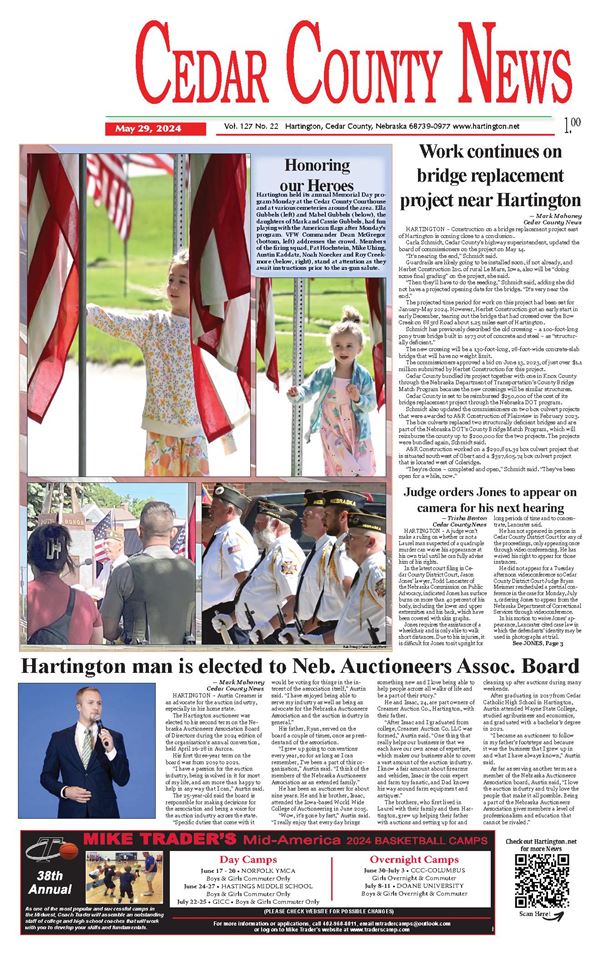
Cedar County News
Read Laurel Advocate e-Edition
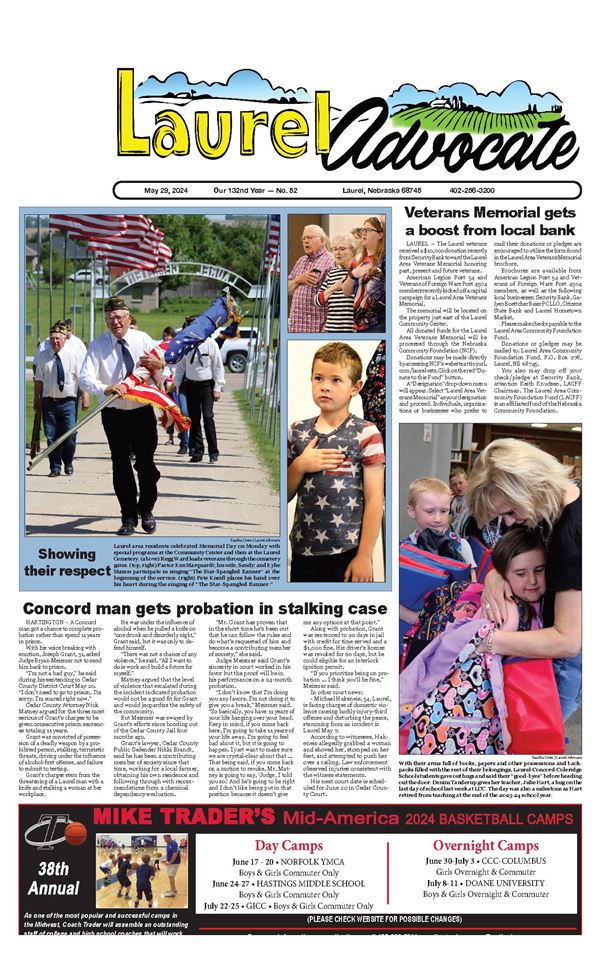
Laurel Advocate
Read The Randolph times e-Edition
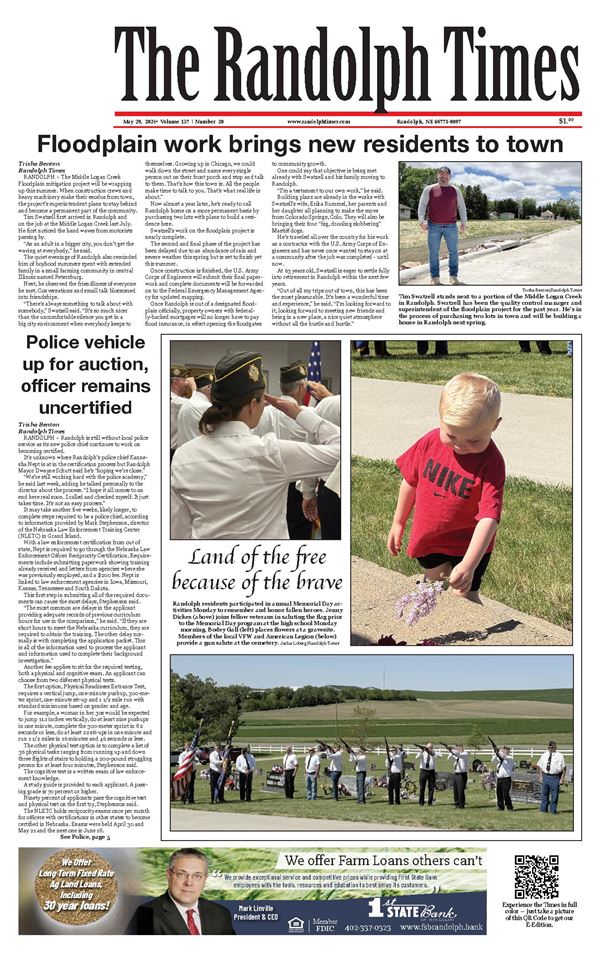
The Randolph Times