Go to main contentsGo to search barGo to main menu
Monday, December 15, 2025 at 4:00 AM
Leaderboard (below main menu) securechecking
Leaderboard (below main menu) bankofhartington

Street improvements, new businesses come to town in March, 1946

“With this issue of Your Advocate we are entering on our 54th year,“ said Editor Allison in the March 6th issue.

Allison noted that only three men had been in charge of the paper over the course of 54 years. They were Frank Mills who founded the paper in 1893, Carey Nevin who bought it in 1905, and Roscoe Allison who bought it in 1925.

While Allison had no way of knowing without going through the back files, his announcement was three months premature. The first issue of the Advocate was published on June 1, 1893. At some point during Nevin‘s tenure, several issue numbers were skipped and the error was never caught or corrected. Thus Volume 54 No. 1 should have come on June 5, 1946, instead of March 6.

Allison‘s days at the helm of the Advocate would soon come to an end.

Due in part to his wife’s deteriorating health, Allison would sell the paper to Roger Hill at the end of April. Hill, who had previously published the Allen News, had been working for the Advocate since December 1945.

Estelle Allison, usually referred to as “The Boss,” had just returned home from Sioux City where she had been hospitalized for several months following a serious back operation. She would be confined to bed for several weeks and unable to help at the Advocate for many months. After selling the Advocate, the Allisons moved to Oregon where he died in 1960 and she died in 1966.

At the March meeting of the Village Board a paving ordinance was passed. The ordinance provided for paving five blocks with concrete. The blocks included First St. from Elm to Oak; Elm Street from First to Main; and Elm, Oak and Cedar from Main to Third. The projects was intended to reduce the amount of mud dragged into the downtown area from the unpaved side streets.

Until that time the only paved streets in Laurel were Main Street from the highway to the east end of the business district, and Oak and Cedar from Main St. north to the railroad right-of-way. These had been paved with bricks in 1919-1920.

The graveling of old Highway 20, which then ran from Laurel through Dixon and Allen, in 1930 seems to have sparked interest in spreading gravel on some of Laurel’s dirt streets. Because trucks, gravel and workers were available at that time, it was estimated the project would cost significantly less than if it were postponed.

Most of the project would be financed by assessing adjoining property owners $15 for each 50-ft. lot.

In 1931 it was decided to gravel Oak and Elm south to the highway, and Third and Fourth from the east end of town to the highway on the west. This would put all of Laurel‘s churches on gravel streets. Other property owners would have to wait.

Most of the remaining streets were graveled in 1936 through a federal grant from the Works Progress Administration (WPA). Because the purpose of the WPA was to put unemployed people back to work during the Great Depression, the grant stipulated that local labor had to be used as much as possible.

Another project approved at the same time as the paving project mentioned above was to install curbs, gutters, and storm sewer along all of the north-south streets between First and the Fourth St. ditch. Curbs and gutters also would be installed along Third and on Second to the top of the West Hill. The streets not included in the paving project would be graveled.

There was some objection to the two projects because of the cost. “If anything is needed to sell the new paving and curb and gutter project to the people of this community, present condition should do the trick. There was a time when horses and buggies got stuck tight on Main Street and people boasted about it.

These days you can stick a car on almost any street in town and nobody is boasting. When completed the new project should get a large portion of the town out of the mud,” said Allison.

A couple of new businesses were started in March 1946. Wilbur Sydow and Erving Doring purchased Earl August’s service station. His brother Dick August, who had been operating a repair shop in the south part of the building, was told he could remain until he found a new location.

The other new business was a creamery. Russell Haviland, who had operated a creamery in Laurel for several years before selling out, announced he would open a new creamery in the north end of the hotel building on the corner of Oak and Main. Selling cream and eggs, incidentally, was one of the ways farm wives made money to buy groceries.

A couple of changes took place in the beer joint business. Earl “Chunk” Iler, who had recently sold his “recreation parlor” to Henry Hokamp, bought it back.

Hokamp decided he preferred farming to bartending.

Iler’s pool hall was located in the building now known as the Friendly Corner.

Gene Sohler bought the pool hall located in the west side of the building now occupied by the Wintz Funeral Home from John Walton. Known for a number of years as the Central Bar, the place had previously been owned by Gene‘s father Frank Sohler.

Harold Ickes, former Secretary of the Interior in the Roosevelt administration, said that at least 400 new dams were needed in the United States for irrigation and electric power. By building these dams almost 200,000 new farms would be created for the settlement of returned veterans and others. Approximately 53,000 of these new farms could be created in the Missouri River Valley, where the population would increase vastly, he said.

Aviation was expected to be the coming thing in the postwar years. Plans were in the works to organize a chapter of the Flying Farmers. On Sunday, March 31, an organizational meeting was held on the new Archer landing strip on the Isom and Briney farms one mile east and two miles north of Dixon.

Two small planes from the Sioux City Flying Service were on hand to give lessons and rides. In May 1947, Laurel would have its own landing strip a mile and a half south of town on Highway 15.

Roger Tryon is a Laurel High School graduate and retired school teacher now living in Sioux City, Iowa. He has written a history column for the Advocate for over 30 years, now.


Share
Rate

Leaderboard (footer) donmiller
Leaderboard (footer) bankofhartington
Download our app!
App Download Buttons
Google Play StoreApple App Store
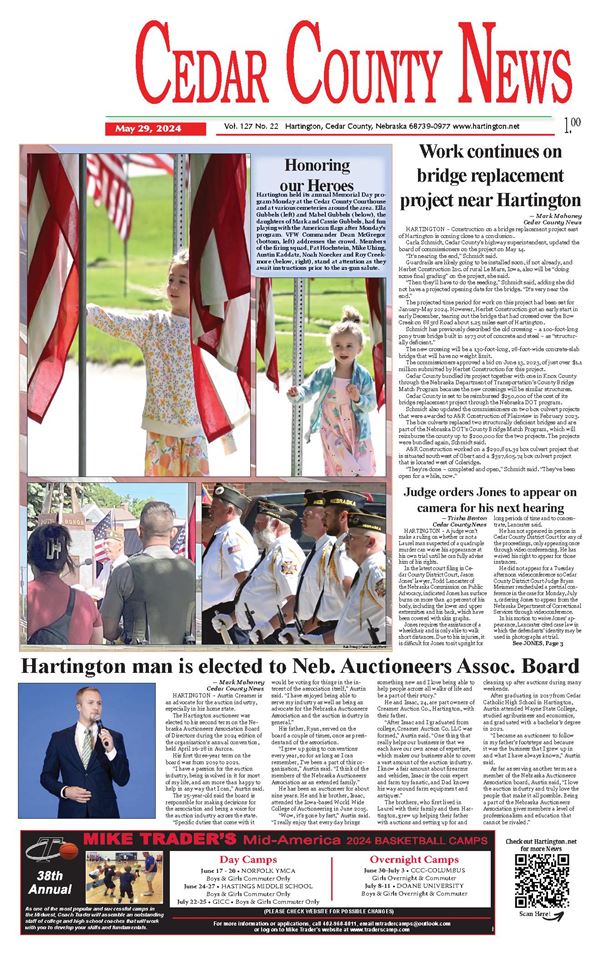
Read Cedar County News e-Edition
Cedar County News
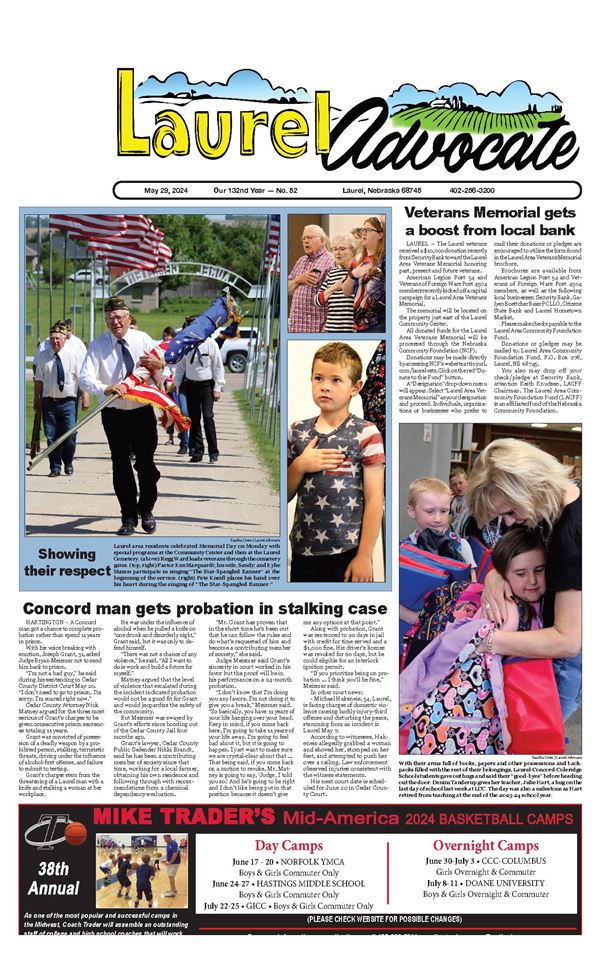
Read Laurel Advocate e-Edition
Laurel Advocate
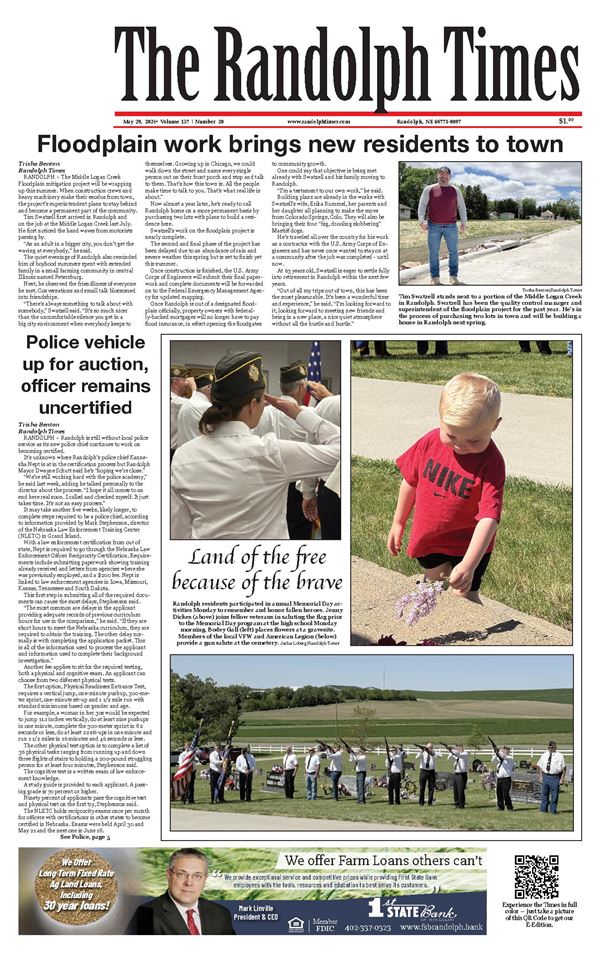
Read The Randolph times e-Edition
The Randolph Times